| Previous Page |
PCLinuxOS Magazine |
PCLinuxOS |
Article List |
Disclaimer |
Next Page |
ICYMI: ShinyHunters Steals 297GB Of Data From Council of Europe |
|
by Paul Arnote  Google is updating privacy settings for how some of its apps collect, save, and use your search data — including to train its AI models, according to an article from Lifehacker. Search Services History will include any media you upload, such as audio, video, and files used in your interactions. You can keep Google from saving your media via Search Services History while still allowing other data to inform your search results and recommendations. You can customize Search Services History specifically and turn Personalized Recommendations on or off from your Google Account under Data & privacy > Personalization settings. IT researchers have discovered security vulnerabilities in the popular phpBB forum software that allow, for example, logging in with any user account, according to an article from Heise. The entire board can thus be taken over. An update is available, which admins should apply quickly. The leak has been in the software for ten years, writes the provider of the AI pentesting tool used in an analysis. As Aikido employees explain, the default configuration is vulnerable, making thousands of forums susceptible to attacks. Independently, Dan Stefan Alexandru has also uncovered the vulnerability and another one. The phpBB team has released version 3.3.17 “Young Bertie,” which closes this and other vulnerabilities and asks forum admins for a swift update of the software. In total, the release patches four security vulnerabilities. Cybernews researchers found an exposed database with 24 billion credential records, raising fresh risks from password reuse and credential stuffing, according to an article from TechRepublic. A massive collection of stolen login credentials containing roughly 24 billion records was briefly exposed online, according to cybersecurity researchers at Cybernews. Researchers say the publicly accessible Elasticsearch cluster contained usernames, email addresses, plaintext passwords, and login URLs linked to a wide range of online services. The database was taken offline after its discovery, but the scale of the collection has raised concerns about how much stolen credential data is circulating within cybercriminal ecosystems. While it’s unclear who assembled the database or how many unique victims are represented, the findings highlight a growing problem: infostealer malware and credential reuse continue to provide attackers with vast quantities of account data that can be weaponized long after an initial compromise.  Image by Leo from Pixabay ShinyHunters has put the Council of Europe on the clock, claiming it stole 297GB of sensitive data and threatening to publish it unless its demands are met, according to an article from TechRepublic. The cyber extortion group says the data includes payroll records, medical information, employee data, and thousands of resumes spanning 16 years. The group has given the Council of Europe until June 16, 2026, to comply with ransom demands or risk having the alleged data exposed online. The organization has not confirmed a breach and says it is investigating the claims. If verified, the incident would expose one of Europe’s most prominent international institutions to the same threat actor linked to attacks targeting Oracle customers and other major organizations. The claim also highlights the growing use of data theft and public leak threats as leverage in modern ransomware-style extortion campaigns. Titles like Microsoft Flight Simulator can offer truly gorgeous visual experiences, but there's an awful lot of simulation involved before you get to the flight. You have to learn a lot about cockpit controls, take-offs and landings, and other simulator-y stuff before you're allowed to soar into the sky and see the planet from a bird's eye view. That's one of the reasons that the flight simulator mode that just launched in Google Earth on the web is likely to be so popular — in just a couple of clicks, you can be zooming through canyons or across cities, without worrying about what kind of plane you're in or how your flaps are set, according to an article from Lifehacker. As Google mentions, this isn't a completely new experience. It's actually been ported over from the Google Earth desktop app, but there, it's rather hidden—more of an Easter egg than a full-blown feature—and offers much more of a flight simulator feel. For example, you need to choose a plane, and figure out how to take off in it, before you get to the eye-popping visuals. Now that this simplified version is available in the web app for free, and it can be run instantly without any flight training, it's likely to be much more popular. To test it out yourself, point your browser towards Google Earth on the web, then click Explore Earth. Find somewhere you want to fly through, then choose Tools > Flight simulator. Have I Been Pwned has added a massive collection of infostealer malware records containing 124 million passwords and 56 million email accounts, according to an article from TechRepublic. The credentials came from stealer logs created by malware that harvests sensitive information from infected devices. The dataset offers a snapshot of how cybercriminal tactics are evolving. As infostealer malware becomes more widespread, attackers are increasingly bypassing organizations altogether and collecting credentials directly from users, creating fresh and simpler opportunities for account takeovers and broader cyberattacks. 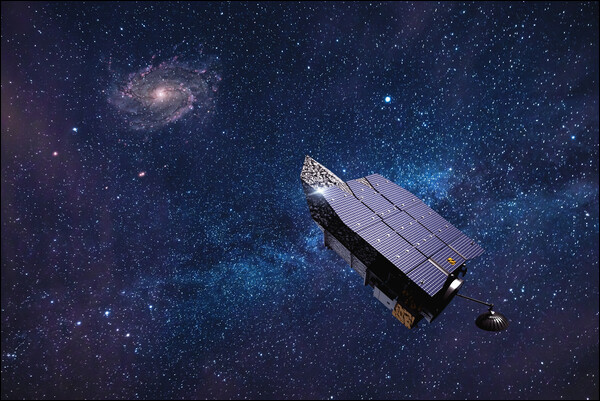 NASA After nearly two decades of development, $4.3 billion and the labor of hundreds of scientists and engineers, the Nancy Grace Roman Space Telescope is less than three months from launch, according to an article from NBC News. From a point roughly 1 million miles from Earth, the telescope is expected to survey the cosmos, capturing panoramas of hundreds of millions of stars and billions of galaxies. With this observatory, NASA hopes to unravel the secrets of dark matter and dark energy and discover thousands of planets beyond our solar system. That’s because Roman will be able to survey and map more of the sky than ever before, at a pace hundreds of times faster. Julie McEnery, the senior project scientist for the Roman telescope here at NASA’s Goddard Space Flight Center, said that in just one month of data collection, Roman will be able to peer at underexplored parts of the Milky Way to study stars across a deep slice of the galaxy, building an astronomical catalog far larger than any that exists today. Windows 10 users just got more breathing room. Microsoft has extended its Windows 10 Extended Security Updates program for personal devices by another year, moving coverage to October 12, 2027, according to an article from TechRepublic. The change gives consumers more time to move to Windows 11 or buy a new PC while still receiving critical security patches. It also highlights a stubborn upgrade problem: many users and small businesses remain on Windows 10 due to hardware requirements, device costs, and slower PC replacement cycles. Apple's "Hide My Email" feature reportedly has a flaw that can expose your real email address to bad actors, according to an article from Lifehacker. According to 404 Media, bad actors can use free people-search sites to quickly learn your real email address from the Hide My Email alias. Hide My Email lets you generate an alias to share with others, and forwards all messages to your main inbox, without revealing your real email address. Apple also plans to change Hide My Email in the near future, and, in the process, make it less effective.  Image by NoName_13 from Pixabay Coffee consumption has been linked to a number of health benefits, such as reduced risks of dementia, head and neck cancer, and all-cause and cardiovascular mortality, according to an article from MedPageToday. According to data from the U.K. Biobank, a higher intake of coffee was associated with lower risks of cirrhosis, hepatocellular carcinoma, and liver-related mortality. These associations persisted for both caffeinated and decaffeinated coffee, and for unsweetened and sweetened coffee. Roadside cameras are no longer just watching cars. Your device is next in line. Defense contractor Leonardo has begun marketing SignalTrace, its upgraded Automatic License Plate Reader (ALPR) system that adds wireless sensing capabilities, enabling law enforcement to record nearby smart device identifiers alongside vehicle information, according to an article from TechRepublic. The company says aggregated observations will enable investigators to identify crime suspects more effectively. The approach broadens what roadside surveillance networks can collect without changing how license plate readers operate. The technology brings its own caveats, too, from potential security implications to privacy concerns; it will have to prove that the advantages outweigh these worries. Eighteen bugs, four of them critical, and one browser update stand between your computer and a bad time, according to an article from TechRepublic. Google pushed out Chrome 149 last week, rolling the Stable channel to version 149.0.7827.196/197 on Windows and Mac, and 149.0.7827.196 on Linux. The update fixes 18 security issues in total: four critical-severity flaws and 14 rated high. Chrome for Android also picked up the patch, landing on version 149.0.7827.197. The two most attention-grabbing flaws live in WebGL, the technology websites use to render interactive 2D and 3D graphics in your browser. Both CVE-2026-13028 and CVE-2026-13032 are “use after free” bugs, a type of memory error in which a program continues to access memory that has already been freed. Attackers can exploit that mistake to break out of Chrome’s sandbox, potentially, the protective bubble meant to keep anything malicious confined to the browser, using nothing more than a rigged webpage. The other two critical issues hit Chrome’s Autofill feature (another use-after-free flaw, CVE-2026-13038) and a component called Blink>InterestGroups, where an out-of-bounds read bug, CVE-2026-13033, was found. Beyond the critical four, the 14 high-severity fixes touch a wide swath of Chrome’s plumbing, including GPU handling, Bluetooth, DevTools, passwords, web authentication, and Chrome’s WebView component, among others. Altogether, roughly 10 of the 18 patched bugs across both severity tiers are use-after-free issues. 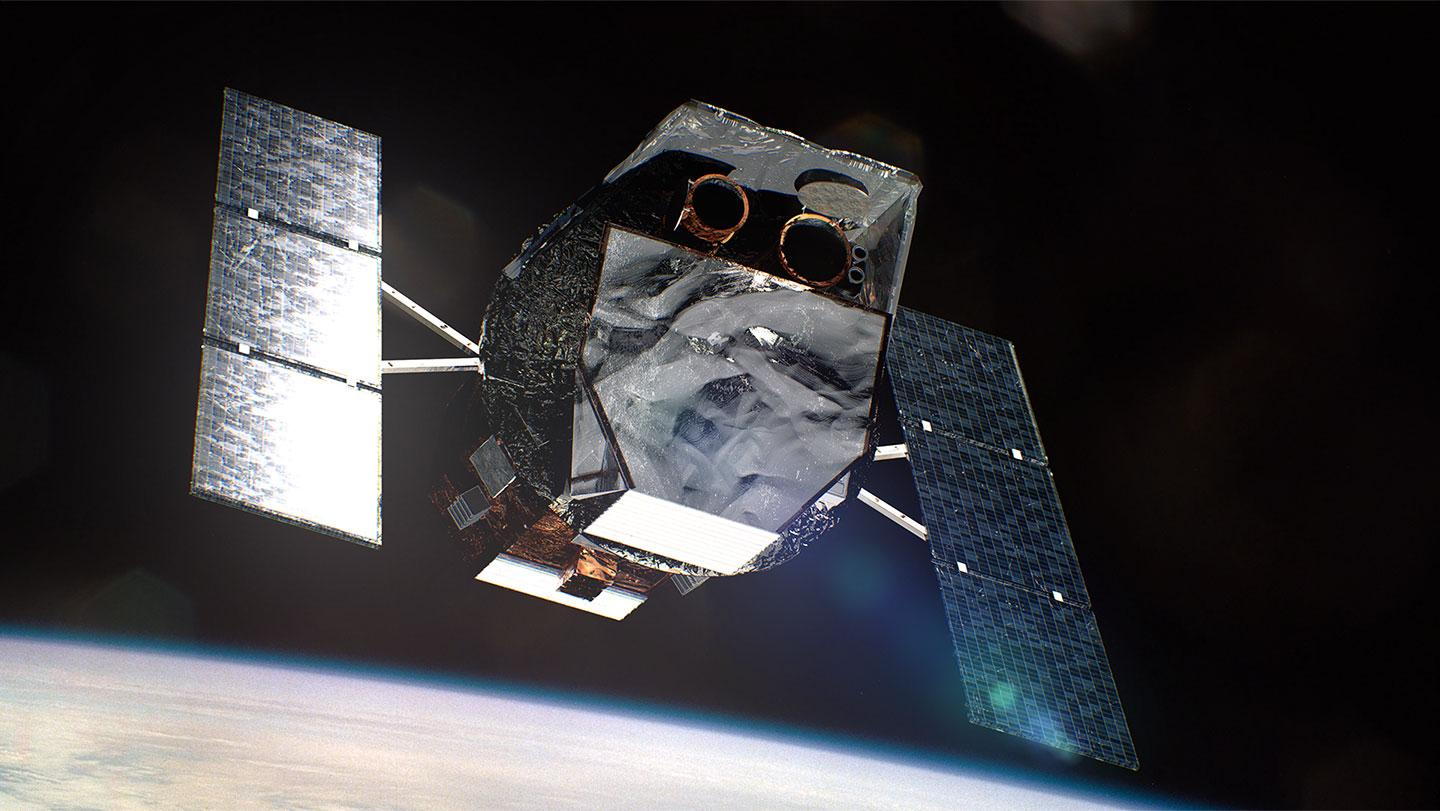 Chris Smith (KBRwyle)/NASA’s Goddard Space Flight Center A robotic tugboat is launching to pull a decades-old space telescope to safety, according to an article from Science News. Soon, a private spacecraft called LINK will launch to rescue NASA’s Swift space telescope from a fiery death in Earth’s atmosphere. The Neil Gehrels Swift Observatory launched in 2004 to study gamma-ray bursts and other cosmic events. It has been enormously successful and is still making new discoveries. But all satellites eventually succumb to gravity, and most burn up in Earth’s atmosphere before they reach the ground. In early 2025, NASA scientists realized Swift was losing altitude faster than expected: Strong solar activity starting in 2024 had given Earth’s atmosphere an energy boost, expanding it slightly and putting more drag on objects in low orbits. The extra drag meant Swift would reenter and break up sometime in mid-2026 if nothing was done. Google’s Android fight in Europe is over. Its €4.1 billion fine still stands, according to an article from TechRepublic. The European Court of Justice dismissed Google’s and parent company Alphabet’s final appeal, closing a case over Android app agreements and mobile search dominance. Regulators accused the search giant of using licensing terms and pre-installation deals to favor its own services on Android devices. Users may see another Big Tech penalty. Developers and smaller rivals, however, are more likely to see a fight over access, including which services appear first on a phone and which ones must win attention later. Getty is scrapping its $3.7 billion merger with Shutterstock after UK regulators required Shutterstock to sell its editorial business, according to an article from TechRepublic. Getty Images’ Shutterstock merger cleared US antitrust review, but it could not get past the UK’s. Getty plans to terminate its merger agreement with Shutterstock after the UK’s Competition and Markets Authority required Shutterstock to sell its global editorial business as a condition for approval. The blocked path keeps competition concerns around image licensing, editorial photo access, and pricing pressure front and center for the UK media market. The collapse also shows how regional regulators can reshape global technology and media deals, even after companies clear a major US review. 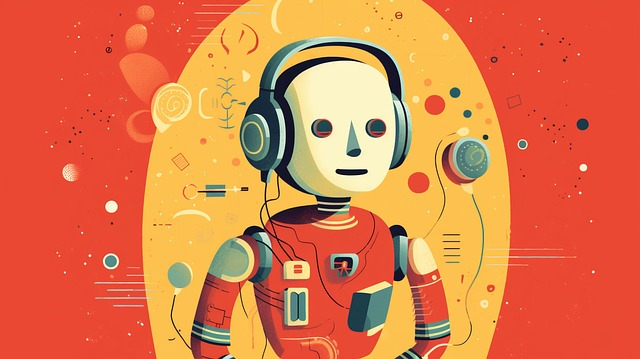 Image by Shawn Suttle from Pixabay It used to be easy to tell when a face was generated with artificial intelligence (AI). Whether it was a distinctive uncanny sheen, impossibly smooth skin, eyes that didn’t quite make sense or a conspicuous third ear, older AI models’ facsimiles of human faces were simple to spot and easy to dismiss. That’s just not true anymore. Now, AI image generators can produce portraits so convincing that even careful observers struggle to distinguish fact from figment. That’s why apps such as Zoom and Tinder allow their users to submit biometric identification, such as retinal scans, to help prove that a real person exists behind a profile picture. But a new study suggests you can train your brain to get better at spotting fakes, according to an article from Scientific American. Past attempts to teach people to spot AI faces have focused on training viewers to look for visual glitches or statistical fingerprints left behind by a particular image generator, such as a wonky ear or an eye with two pupils. The problem is that those clues can disappear with a software update or by simply using a different prompt. “The AI is getting too good,” said Amy Dawel, an associate professor at Australian National University and the lead author on the study, in a press release. “And fraudsters may avoid using pictures with obvious flaws anyway.” The result is an endless technological arms race humanity seems destined to lose. Instead, the researchers taught the participants how to recognize broader patterns in how AI systems generate images. “Our training directs people’s attention to global qualities that differ between AI and human faces,” Dawel said. This BBC article takes a deeper look into how to spot deepfake AI images. A quick Google Lens search or voice query may now come with a bigger privacy tradeoff, according to an article from TechRepublic. Google has updated its Search services settings so that saved media such as images, files, audio, and video from user interactions may be used to improve Google’s AI models and technologies unless users opt out. The uncomfortable part is how ordinary those uploads can be: a work screenshot, a translated document, a product photo, or a voice query that was never meant to become AI training material. For businesses, the issue is not only what Google changed. It is how easily employees can move sensitive information into consumer search tools while trying to solve a routine problem. In a support document, Google said that Search services include Search, Maps, Shopping, Flights, Hotels, Translate, and News. The company also adds that the new settings are “rolling out gradually over the next few months”, and users who do not see the updated controls are still managed through Web & App Activity. An incident at AssuranceAmerica exposed nearly 7 million individuals' insurance information, including driver's license numbers, according to an article from Lifehacker. Scammers can use your number to open financial accounts in your name, create fake IDs, change your mailing address, or generate an entirely new identity. Take precautions, such as monitoring your accounts, freezing your credit, and ordering a background check and driving record to catch suspicious activity.  Image by Joshgmit from Pixabay A cybercrime crew left one of its own servers wide open on the internet for three weeks, and it exposed the operation's inner workings: the hacking tools, the activity logs, and target lists naming more than 1.4 million websites, according to an article from The Hacker News. Far fewer were actually broken into, but the exposed files showed researchers how a mass site-hacking operation runs from the inside. The operation, now tracked as WP-SHELLSTORM, is what SOCRadar calls a webshell access brokerage: a crew that breaks into sites at scale, plants a hidden backdoor (a "webshell") on each, and packages that access for resale. The strongest activity hit WordPress sites running out-of-date plugins. If you run WordPress or Joomla, the two flaws that mattered most were in the Breeze caching plugin and Joomla's JCE editor; skip to the checklist below if that's you. Linus Torvalds no longer sees himself as a programmer, according to an article from ZDNet. “Let's be entirely honest. I hardly read code at all anymore. I'm not a programmer, I'm a development lead.” He still writes small patches, but they're more guidance than authority: “I still write code in the sense that I send people patches… but then I make it very clear that, hey, this is a suggestion. This is untested… I expect the maintainers of the code to be the ones who then send me the fix back. So I very seldom commit my own code anymore.” What matters most to him is understanding intent: “When I do a pull request, I want to understand the bigger picture. It's one of the reasons I ask for pull requests with very good explanations: I will read them. I want to understand what's going on.” He said he dives into code mainly when something forces his attention, like build breaks or merge conflicts: “I've done so many conflict resolutions over the years that I could probably do them in my sleep… Quite often at that point, when I look at the code, I sometimes find issues.” This sounds like a complete and total privacy nightmare. Meta is reportedly working on a pair of smart glasses that would take photos and record audio every few seconds, enabling its AI service to become more aware of its surroundings and help the wearer recall things, according to an article from eWeek. In tests of the prototype, the red LED light on the corner of the glasses does not turn on, meaning non-wearers would not know when the glasses are recording. This has reportedly caused internal friction at Meta due to the obvious privacy concerns. Meta CEO Mark Zuckerberg has said he wants the company’s smart glasses to act more like an agent for the wearer, rather than just a pair of glasses that can take photos and videos. Adding more ambient awareness could make the glasses more useful, increase usage time, and potentially turn them into a more credible alternative to the smartphone.  Image background by Pete Linforth from Pixabay IFPI, RIAA, A2IM, WIN, IMPALA, The Grammys, SAG-AFTRA & Human Artistry Campaign, representing a broad spectrum of recorded music creators and companies around the world, announced a unified approach to voluntary track labeling to give fans clearer information about the use of generative AI (GenAI) in sound recordings, according to a press release from the RIAA. Distinguishing between “AI-Generated” and “AI-Assisted,” the labels are conceived with broad, global adoption in mind, across digital music services and other partners. The labeling is designed to evolve as technology and requirements change. The GenAI labels announced build on the important work of other partners to provide a harmonized and fan-friendly approach designed to support broad adoption of an industry standard across the music ecosystem. A natural sugar found in raspberries and used in fake tan lotions has been detected in an enormous cloud of dust and gas that lurks near the heart of the Milky Way, according to an article from The Guardian. The discovery does not suggest that the galaxy revolves around a distant civilisation of pale, safety-conscious frugivores, but shows that compounds important for life can form in the frigid expanse between the stars. The simple sugar erythrulose appears to be produced through chemical reactions on tiny interstellar dust grains, which then rain down on nearby worlds or reach them after being incorporated into comets that eventually clatter into planets. New research has revealed that tau, a protein best known for its connection to Alzheimer's disease, is also essential for creating long lasting memories, according to an article from Science Daily. The discovery provides new insight into how healthy memory works and could help guide future efforts to develop treatments for dementia. The study, led by Flinders University in partnership with researchers from the University of New South Wales and Macquarie University, was published in Nature Communications. It found that tau helps organize and stabilize memories so they can be retained over time.  NASA, ESA, CSA, Dani Player (STScI) The Solar System gives us a familiar catalogue of planets: small rocky worlds close to the Sun, then gas and ice giants farther out, according to an article from Space Daily. For a long time, that local inventory shaped the imagination. A planet could be Earth-like, Mars-like, Jupiter-like, Neptune-like. Then exoplanet surveys began finding something that sits awkwardly between those categories. These worlds are often called sub-Neptunes, or sometimes grouped with super-Earths depending on their size and mass. They are larger than Earth but smaller than Neptune. They appear again and again in data from missions such as Kepler, yet there is no example of one orbiting the Sun. A review by Jacob Bean, Sean Raymond and James Owen put the problem plainly: planets between Earth and Neptune are among the most common types revealed by exoplanet surveys, but the Solar System gives astronomers no nearby specimen to inspect. That absence is part of the difficulty. We can measure some of these planets’ sizes and, for a smaller set, their masses. But a radius between Earth and Neptune does not by itself tell us whether the planet is a rocky core with a thin hydrogen envelope, a water-rich world under high pressure, a mini-Neptune with a deep atmosphere, or something more complicated. The category is observationally common and physically unresolved. New observations show that the supermassive black hole at the center of the Milky Way does not consume nearby dust objects as previously thought, according to an article from SciTechDaily. Near the heart of the Milky Way, where the supermassive black hole Sagittarius A* bends nearby space with immense gravity, astronomers have been watching several strange dusty objects for signs of destruction. Earlier studies suggested that some of them might be stretched apart and swallowed. New observations now show a different outcome. An international research team led by PD Dr Florian Peißker at the University of Cologne used ERIS (Enhanced Resolution Imager and Spectrograph) at the Very Large Telescope (VLT) facility in Chile to track these objects in detail. The data show that several dusty objects are following stable paths around Sagittarius A*, the black hole at the center of our galaxy. The results were published in Astronomy & Astrophysics. When Italian and German researchers modeled a square-meter array of 1,482 neodymium magnets, the simulation showed roughly a fifth of incoming low-energy solar protons being deflected — without any power supply, cryogenic cooling, or moving parts, according to an article from Space Daily. The work, published as a 2026 preprint, revives a long-standing engineering question: whether simple permanent magnets could shoulder part of the radiation-protection burden that currently forces deep-space mission designers to choose between bulky mass shielding and complex, power-hungry active systems.  The James Webb Space Telescope (JWST) is celebrating its fourth birthday, and like PetaPixel did two years ago, it’s the perfect opportunity to look at the 25 best space photos Webb has captured thus far, according to an article from PetaPixel. The $10 billion NASA/ESA/CSA JWST has produced a great deal of exceptional scientific work in its first four years of operation, much of which is utterly groundbreaking. However, that alone is not enough to warrant a photo’s inclusion. While scientific value is important, a Webb image featured here must also be beautiful. If you’re a space enthusiast, this is a great chance to grab some awesome new wallpapers. While the world drowns in plastic, researchers are on the hunt for practical materials that are lightweight, tough, and biodegradable. In recent years, scientists have increasingly turned to the natural world for inspiration – with a whole lot of research focusing on the impressive features of spider silk. But there's another promising alternative hiding in plain sight: bee silk, according to an article from Science Alert. If you're scratching your head right now, you're not alone. Most people have never heard of bee silk. Earlier this year, Wasserman and his team became the first to create a film of a specific type of bee silk – an important first step in harnessing the power of the incredible material. Brown University chemists have provided direct evidence that upends the textbook explanation of how triple chemical bonds work in heavy elements, according to a press release from Brown University. In a study published in Science, the researchers show evidence that when atomic nuclei are sufficiently heavy, the principles described in Einstein’s theory of relativity change the structure of triple bonds — blurring the lines between the two separate types of bonds involved in textbook triple bonding. Using a technique called photoelectron spectroscopy, the Brown team showed bonds created by carbon and the heavy element bismuth have the telltale signature of relativistic bonds. 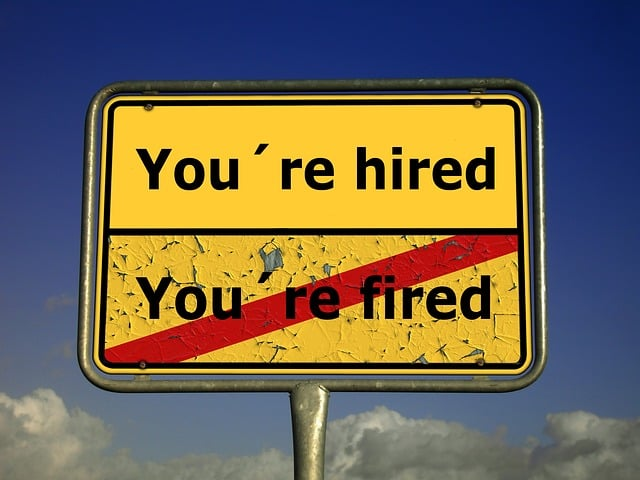 Image by Gerd Altmann from Pixabay According to an article from eWeek, more than 200 prominent economists, researchers, and technology executives have signed a statement warning that increasingly capable AI could disrupt employment on a scale that demands government action, The New York Times reported. The signatories include Nobel Prize-winning economists and leaders associated with Google, OpenAI, Anthropic, and other major technology companies. “A.I. may become radically more powerful over the next 10 years,” the researchers wrote in a statement. They noted that the technology could lead to “large-scale job displacement” while also indicating that it could create positive opportunities, such as major gains in living standards. The statement does not predict that mass unemployment is inevitable. Instead, it argues that policymakers should establish safeguards now to reduce the risk of large-scale job displacement as AI systems become more capable. Visit here to view the full statement and the list of signatories. Ireland’s data centers consumed 7,663 gigawatt-hours of electricity in 2025, nearly as much as all homes in the country combined, according to an article from eWeek. Figures released by Ireland’s Central Statistics Office show demand increased 10% from the previous year and now accounts for 23% of metered electricity consumption. Growth at this pace is testing whether the country can build new energy supplies quickly enough to support its digital economy without passing higher costs or tighter grid constraints on households and businesses. Xanthan gum is found almost everywhere. This food additive has thickening, stabilizing, and gelling properties and is one of the most widely used by the food industry to adjust the consistency of ice cream, yogurt, cakes, sauces, and gluten-free pasta. It is also used to prepare beverages for people with dysphagia, or difficulty swallowing. However, a study conducted at the Federal University of São Paulo (UNIFESP) in Brazil raised an important red flag by demonstrating that chronic xanthan gum consumption caused colon inflammation, altered gut microbiota, and led to intestinal barrier integrity loss in an experimental model, according to an article from News-Medical. In the study, which was supported by FAPESP, rats were fed xanthan gum chronically for ten weeks. "This isn't about demonizing xanthan gum. Rather, it's about emphasizing the need to invest in translational studies involving humans. It's possible that occasional use in small amounts as an additive doesn't harm health. The concern is with daily use as an ingredient and the cumulative effect of the thickener," explains Alessandra Rischiteli, the nutritionist and speech-language pathologist who conducted the study. The study was described in an article published in the journal PLOS One.  Image by OpenClipart-Vectors from Pixabay The AI spending boom produced an unexpected casualty: the global smartphone market, according to an article from TechRepublic. Global smartphone shipments fell 11% year over year in the second quarter of 2026, the lowest ever since 2013. Counterpoint attributed much of the slowdown to memory suppliers shifting more production toward higher-margin AI demand, which pushed up DRAM and NAND prices for smartphone makers. Despite the decline in shipments, certain brands still reported positive metrics. Counterpoint Research reported that Samsung holds the top market share, while Apple bucked the trend with a slight but noticeable growth in shipments while maintaining a sizable market share. This reflects stronger demand for premium smartphones. Here’s something that should make you happy to be a Linux user. Microsoft's July 2026 Patch Tuesday provides security updates for a record-breaking 570 flaws, including two zero-day vulnerabilities exploited in attacks and one publicly disclosed, according to an article from BleepingComputer. Patch Tuesday addresses 59 "Critical" vulnerabilities, 48 of which are remote code execution, 9 are elevation of privilege, 1 is a security bypass, and 1 is a spoofing. The approximate number of bugs in each vulnerability category is listed here: 254 Elevation of Privilege Vulnerabilities, 17 Security Feature Bypass Vulnerabilities, 145 Remote Code Execution Vulnerabilities, 102 Information Disclosure Vulnerabilities, 35 Denial of Service Vulnerabilities, and 16 Spoofing Vulnerabilities. Chief penguinista Linus Torvalds has declared that Linux is not an “anti-AI” project, telling contributors who object they can either walk away or fork the kernel, according to an article from The Register. On lore.kernel.org, the archive for Linux kernel mailing lists, reformed potty mouth Linus was responding to a discussion about some negative sentiments toward AI. It is one area where Torvalds said he was willing to “absolutely put my foot down as the top-level maintainer … Linux is not one of those anti-AI projects, and if somebody has issues with that they can do the open-source thing and fork it." “Or just walk away.” Ever the pragmatist, Torvalds described AI as a tool, “just like other tools we use. And it’s clearly a useful one. It may not have been that ‘clearly’ even just a year ago, but it’s no longer in question today. “Anybody who doubts that clearly hasn’t actually used it.” In October 2024, the Linux kingpin branded 90 percent of AI as marketing hype, saying he hated the hoopla generated by the tech industry. He said at the time: “I really don’t want to go there, so my approach to AI right now is I will basically ignore it.”  Image by Gordon Johnson from Pixabay An Alzheimer’s drug could prevent dementia before symptoms show, with research suggesting it could clear toxic brain plaques in just three months, according to an article from The Telegraph (UK). Trontinemab, a medicine given as a monthly infusion, will be offered to about 1,600 people with no memory problems who are at high risk of the disease to see whether it can stave off symptoms. Scientists said the landmark trial could be a “game changer”, raising the prospect of “statins for the brain” being routinely offered to people in mid-life. The phase III trial – the final pre-approval testing stage for a new treatment – will use blood tests to identify those most likely to benefit from taking part. People aged 55 and over who are “cognitively unimpaired” but have biomarkers linked to the development of Alzheimer’s will be invited to take part. Trontinemab, manufactured by Swiss pharmaceutical firm Roche, works by removing sticky amyloid plaques that aggregate in the brain and cause the degenerative disease. A new formulation of chewable gummies loaded with bacteria has just been tested in a Japanese study and might offer an innovative way to maintain good gum health, according to an article from ScienceAlert. Researchers led by a team from the Institute of Science Tokyo in Japan wanted to see if there was a way to ward off damaging gum disease (or periodontitis) beyond the basics of daily brushing and flossing. They discovered that snacking on gummy chews loaded with beneficial bacteria could reduce gum bleeding and improve health markers in people with mild gingivitis (where the gums bleed and swell, often leading to periodontitis). LastPass is warning users about an ongoing phishing campaign that is using fake security notices to direct them to fraudulent websites, according to an article from BleepingComputer. The phishing emails are crafted to resemble legitimate corporate communications, notifying recipients of updated security policies and directing them to a landing page that impersonates DocuSign and claiming to provide a document for review. LastPass emphasizes that its systems have not been compromised and that the phishing emails did not originate from its infrastructure, despite the attackers using domains designed to appear as legitimate company services. BleepingComputer has found that Bitwarden users are targeted by similar emails sent from 'hello@bitwardennewsletter.com' and redirecting them to bitwardencompliance[.]com. |