| Previous Page |
PCLinuxOS Magazine |
PCLinuxOS |
Article List |
Disclaimer |
Next Page |
AI Is Finally Helping The People |
|
by Alessandro Ebersol (Agent Smith)
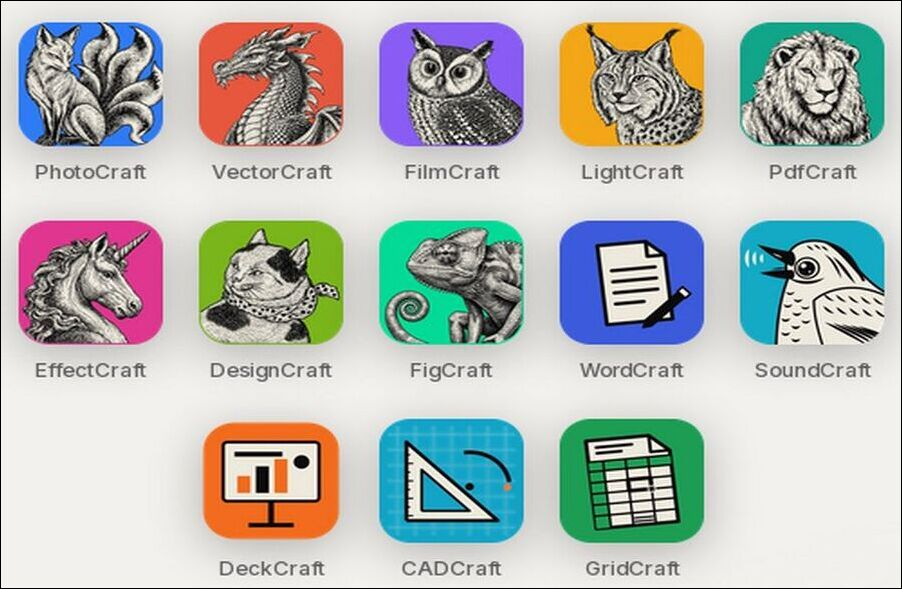
 In early October 2026, the world of proprietary audio, video, graphics, text, and office applications was shaken by the public launch of the Artcraft suite. What the Artcraft suite is and how it revolutionizes the relationship between consumers and (mega) corporations—which abuse their economic power—is what we will explore next.  Artcraft is a suite of applications created by Brandon Thomas. The project officially began on July 14, 2025, on GitHub, with its first version, 001, released on that date. Brandon, aided by Anthropic’s generative AI Claude Opus 3.5, created clones of several well-known applications, starting with the Adobe suite. As of the time of this writing, the collection already includes 13 applications, namely:
Brandon Thomas created these open-source clones out of frustration with Adobe's abusive practices. His main reasons were:
After usable versions were posted on GitHub, the project gained more contributors, who are committed to the project, leading to several daily releases of the Artcraft suite.
 Dark patterns are interface design choices deliberately created to manipulate users and lead them to make decisions they would not make if they had clear information or if the process were simple. These techniques are often used by companies to create intentional obstacles, such as making it difficult to cancel a subscription or service. A common example cited is when a website or app changes the layout, colors, or placement of “cancel” and “keep subscription” buttons to confuse the user when they try to leave the platform.
But despite Brandon and his team's genius, they might get into trouble.
 Brandon Thomas's project faces several complex legal risks as it seeks to recreate Adobe software; the main challenges include:
To mitigate these risks, developers often use the “clean room” strategy (clean room design), in which the team analyzing the original software is isolated from the team writing the new code, in an effort to ensure that only public features and specifications are used, without copying the original source code. However, there are legal provisions that cover what Brandon is doing, and they relate to fair use.
 Despite the risks Brandon and his team face, U.S. law—specifically Section 1201 of the DMCA—permits reverse engineering under certain specific conditions. The legislation authorizes anyone who has the legal right to use a program to circumvent digital locks for the sole purpose of identifying and analyzing components necessary for interoperability between independently created programs. Now, porting the Adobe suite to Linux has long been a demand from the entire community, and now, thanks to Brandon Thomas’s work, it achieves what Adobe never wanted to do—but, as far as we can tell, it would be entirely possible. Adobe simply did not do it due to collusion (with Microsoft/Apple) and market monopolization. And this reason—creating a clone that works on Linux—could legitimize the entire Artcraft suite. Furthermore, there are several important legal precedents, such as the Sega v. Accolade case, where the court ruled that decompiling software can be considered “fair use” when it is the only way to access a program’s ideas and functional elements for a legitimate reason. Although caught off guard, Adobe may fight back and launch a very strong counterattack.
 It is quite plausible that Adobe and other software companies will push for legislative changes to curb the emergence of open-source clones. These clones erode the market “moat” that protects Adobe’s business model, so the company may seek to:
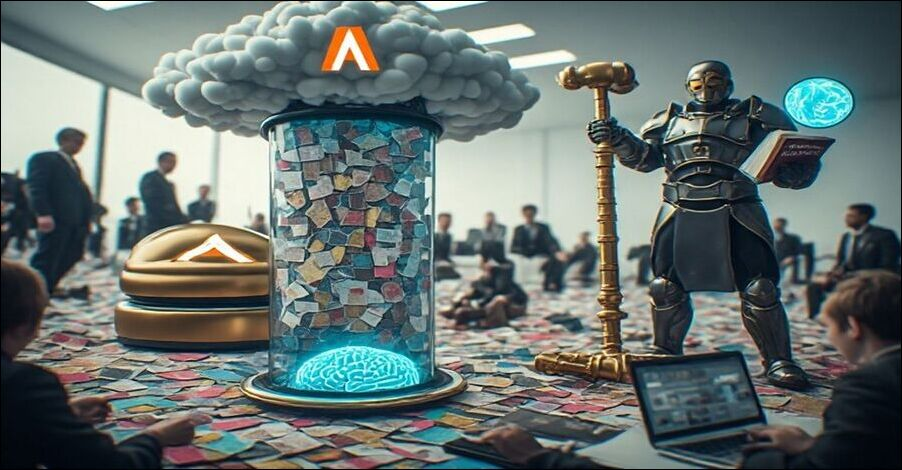 The company's current situation clearly constitutes a case of double standards, creating a significant imbalance between Adobe's corporate power and user rights. The conflict of interest: 1. Content Use for AI: Adobe has updated its terms to allow access to users’ private files and session data (through both manual and automated means) for the purpose of training its artificial intelligence models. The most critical issue is that the company did not offer an opt-out option, forcing users to accept the new rules or risk losing access to their own work. 2. Protection against competition: At the same time, Adobe uses provisions in its Terms of Service (specifically Section 17b) to expressly prohibit users or third parties from reverse engineering or creating alternatives (clones) to its software. Why it’s unfair:
Brandon Thomas’s effort to use AI to create open-source clones is a heroic response to this system, representing an attempt to restore balance in a market where copyright laws and contractual policies are being distorted in favor of corporate profit rather than consumer freedom. But wait, there’s more … Not only was Adobe software re-created — and in Rust (of all languages)—but the PlayStation 5 was also jailbroken, using artificial intelligence.
 The PlayStation 5 was recently jailbroken, and this development has incredible implications for PlayStation 5 owners. Thanks to the jailbreak, the PS5’s capabilities have increased exponentially:
 Artificial Intelligence didn't magically “break” the PlayStation 5, but it acted as a catalyst for manual labor that was already possible before. The process unfolded as follows:
But why did an entire community rally around jailbreaking the PlayStation 5? A simple, straightforward answer: FAFO, Sony. Sony did not include backward compatibility — which had been a tradition since the PlayStation 2 — and promised to do away with physical discs, leaving users dependent on its online store as the only way to access their games. And, by the way, Sony doesn’t have a good track record with its online store, having deleted 550 movies that were legally purchased by its customers. And most of those customers weren’t reimbursed — a low move for a corporation like Sony (or maybe not; Sony has always been a scoundrel, ever since 2005, when it infected millions of CDs with rootkits). Now, the PS5 runs all games from previous generations, plays discs and emulators, and even has a “pirate” online store with free games. Don’t even get me started on payback …
 What we’re witnessing is the result of the backlash of the consumers, based on years of neglect, and greed of large corporations. The bad deeds of the Big Techs are coming back to haunt them. From Adobe’s well-deserved downfall — it had already been losing ground to Canva, a great online, cross-platform service with integrated AI that generates professional-quality graphic designs — through the successive price hikes for the Adobe suite, its refusal to release its apps for Linux (something its customers had been asking for on the Adobe forum for AGES), its draconian policies regarding terms of service — which now force customers to let Adobe train its AI using users’ work, for free, created with the suite they paid for — It’s almost as if every one of the company’s customers is paying to train Adobe’s AI. And let’s not forget to mention Sony, which has fallen out of favor with its customers and consumers after a succession of abuses, negligence, and unprecedented greed. But all these events, which are happening almost simultaneously (and the situation is so fast-paced that if you blink, you’ll miss what’s going on), have their roots in two things: copyright laws being abused by large corporations, and the disregard and negligence with which these large companies treat their paying customers, since these companies have gone from being legitimate businesses to extorting their users. Copyright laws should have been reformed by now, but with corporations like Disney lobbying to extend copyright protection to nearly 100 years, what chance do we have of having laws that are fairer and reflect the current reality? And, even worse, now with AI, no one will be able to claim intellectual property rights anymore, since training AI systems with copyrighted material will allow them to create derivative works with no connection to the originals. But now, ordinary people are fighting back and pushing back—and they’re also using artificial intelligence to their advantage. After all, if the big techs can do it, why can’t the average Joe? However, this trend of using AI for the benefit of users could trigger an unprecedented backlash from large corporations, leading them to finally regulate AI. Well, it will be very interesting to see the mental gymnastics Adobe’s lawyers perform as they try to criminalize AI in court, while at the same time the company exploits its users’ work, and they have no option but to comply, or risk losing access to their own work. But since President Trump himself has said he won’t regulate AI — that he’ll encourage its use and development — only the future will tell what will happen. Still, it’s satisfying to see AI helping ordinary people, for a change. This article was written with the help of AI … for a change. |