| Previous Page |
PCLinuxOS Magazine |
PCLinuxOS |
Article List |
Disclaimer |
Next Page |
Free Software Offers Trust And Privacy; Ring Offers Mass Surveillance |
|
by Heshan de Silva-Weeramuni 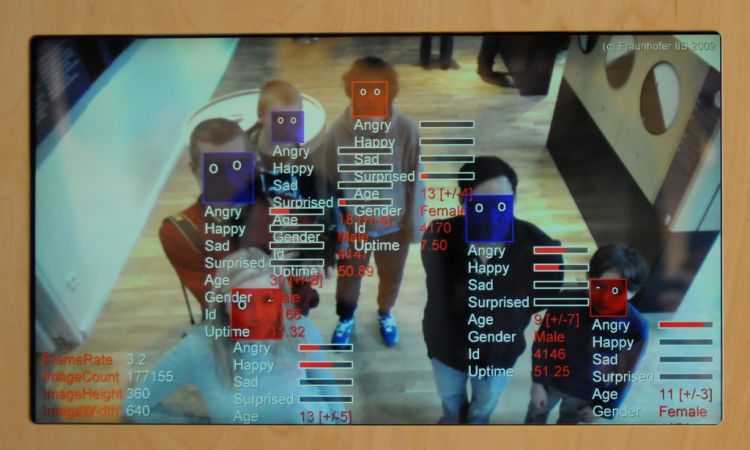 Any kind of mass surveillance, especially if it involves nonfree software, is unacceptable. A lost dog's best friend: that's how Amazon-subsidiary Ring tried to position itself with its 2026 Super Bowl commercial. Trying to collar the doorbell surveillance camera market, Ring presumably hoped for enthusiastic tail-wagging on the public's part when unveiling its "Search Party" feature in the ad. Instead, what Ring unleashed was a flood of ridicule and scorn. Numerous privacy advocates, lawmakers, and civil liberties groups, as well as the ad's viewers, all united to rightly label what Ring was trying to push as nothing but a thinly-veiled wolf-in-sheep's-clothing propaganda campaign for mass surveillance. Amazon's ultimate aim is to monitor humans, not dogs. This point was especially well articulated in a video post by notable dog-lover Matt Nelson, the owner of the social media account WeRateDogs. Even Ring's fellow proprietary software competitor Wyze, sensing a chance to out-alpha an industry top dog, hastily joined the dog-pile with its own parody ad. Tail between its legs, Ring retreated. In an obvious effort to deflect from their negative intentions, rather than continuing to promote its Search Party feature, on February 12, 2026 (four days after the Super Bowl), Ring spread the word that it had ended its partnership with Flock Safety, another controversial mass-surveillance freedom-restricting software outfit. This partnership with Flock (which started in October 2025) was described by Ring as a project "to work together on an integration with Community Requests." Community Requests is Ring's feature which lets police ask for users' Ring footage. In its announcement, Ring was careful to pointedly state that "the integration never launched, so no Ring customer videos were ever sent to Flock Safety." Were they planning to?
Flock's freedom-restricting software reads your license plate without your consent, and passes that data on to US law enforcement agencies, also without your consent, and "without a warrant, or probable cause, or even reasonable suspicion of wrongdoing." Perhaps Ring's management hoped that severing links with a fellow corporate mass surveillance peddler was a good way to improve its public perception. After all, Flock is receiving lots of negative scrutiny for gobbling up enormous amounts of data documenting your movements, and then selling that data to US government agencies, including ICE. Instead, a few days later, 404 Media published an internal email that had been sent to Ring staff by its founder Jamie Siminoff, further cratering its reputation. In his email Siminoff celebrated the rollout of the Search Party feature by declaring that, "I believe that the foundation we created with Search Party, first for finding dogs, will end up becoming one of the most important pieces of tech and innovation to truly unlock the impact of our mission. You can now see a future where we are able to zero out crime in neighborhoods." Clearly, finding dogs is not the ultimate goal for the Search Party feature, unless of course Siminoff believes lost dogs are committing crime in neighborhoods. When you consider that Amazon's Ring also has a feature called Familiar Faces which allows users to identify individual faces, the connection isn't really that difficult to make between the software's existing or potential capabilities and the stated vision Siminoff has for the future of the technology. Couple that with how law enforcement agencies or ordinary Ring users may be able to activate other people's cameras through the Search Party feature, people's reaction of "this is creepy" becomes even more justified. Picture Ring users activating their neighbors' cameras to follow you home if they want to know where you live. Or tracking you on a public street because in their eyes you "don't look like the type of person who belongs here." Or because it doesn't like what you believe in, a government agency could commandeer a vast camera network to trail you to a public square or a friend's home where you're peacefully exercising your rights to free assembly and free speech. We should all be troubled.
Unlike the intrusive proprietary nonfree software Ring wants to push on us, the free software philosophy is built on the fundamental belief that software should respect you. Rather than you having to blindly trust a corporation with your data and hope for the best, the four freedoms embed trust and transparency — the freedom of a computer user to run, study and edit, copy, and share the software they use. When we understand and enact these simple but fundamental principles, we also virtually guarantee a host of other personal freedoms. This is in stark contrast to freedom-restricting proprietary software created by unaccountable corporations or government agencies across the world. Instead of building user freedom at its center, giving you the respect to make decisions about the technology you use in your daily life, proprietary software instead insists it acts for you, and then insist you trust it by simply taking its word that it will not curtail your freedom. Because you don't control your data or the software used to access it, systems like Ring can and will share your data with third parties without your consent, including with police forces who don't have a warrant. Threats to freedom have only increased since the shift from storing our media locally and using local software, to storing them on other people's servers and using other people's servers. Methods of mass surveillance have become slipperier, more privatized, and increasingly cloaked in slick corporate marketing campaigns, like those that tugs at your heartstrings about lost dogs. And of course the punchline: the deployment of these types of mass surveillance structures that trap us all are also designed to be paid for and installed by us, either through our taxes or through our wallets but without our control. Almost unconsciously, we are being asked to sleepwalk into a future where we live inside a mass surveillance panopticon we have no control over. Free software has a vital role to play in successfully resisting this march toward mass surveillance. We can individually and collectively help build the more just and transparent world we all deserve through free software that embraces user freedom.
In practical terms, what can you do? Consider opposing mass surveillance by not having a camera (free or nonfree) stalking your neighborhood. If you absolutely must have a home camera to keep an eye on your dog, you can consider a DIY approach because we are not aware of a good free software camera system. But we understand that it may require some effort on your part, or may mean you have to turn to someone else to help set it up for you. But though such a DIY approach may require more work to set up, choosing not to contribute to mass surveillance is something we will all be grateful to you for. But whatever you do, avoid computing that uses Service as a Software Substitute (SaaSS) models. These remotely-hosted programs collect data from users to do computing that they could do on their own machines. There's no real way to see what these servers are doing with your data, and like in the case with Amazon's Ring, you are asked to take the corporation's word for it that they are being responsible. You can also explore the broader resources we point to in our surveillance campaign pages. One last thing: of course there is a key analog method to combating intrusive mass surveillance: talk to people about the software's inherent nonfree nature. Talk to your family, friends, colleagues, lawmakers, neighbors — especially your neighbors who use doorbell systems that spread mass surveillance. Let them know what free software can offer them, and help them understand that free software is about user freedom. Let's further the collective public conversation about what we stand to lose in a world where freedom-restricting corporations like Amazon, with their clearly described mission of mass surveillance, are allowed to run rampant. Together we can send mass surveillance peddlers to where they deserve to be: the doghouse. You know your dog will agree, and who knows: maybe your cat will, too. |