
| Previous Page |
PCLinuxOS Magazine |
PCLinuxOS |
Article List |
Disclaimer |
Next Page |
The MP4 Patent Has Expired! |
|
by Alessandro Ebersol (Agent Smith)
 The world’s most widely used video codec, MPEG-4, saw its patents expire on July 19, 2026, in Brazil—the last country where those patents were still valid. Is this cause for celebration? Undoubtedly, but let’s not get too carried away—we need to make a few distinctions here. It’s great news, but it’s not quite what you, dear reader, are thinking. So that we can understand what happened and what might still happen, we need to look at the history of MP4 and what it is. What is the MP4 format? MP4, short for MPEG-4 Part 14, is not just a file extension: it is a revolutionary container format that has transformed the way we store and share multimedia content. Unlike traditional formats that focus exclusively on video or audio, MP4 is a versatile container that can store various types of data, including video, audio, images, and subtitles. Think of it as a digital Swiss Army knife, capable of encapsulating all the elements needed for a seamless multimedia experience. In other words, a file with the .mp4 extension is a container, just like the Matroska (MKV) format. 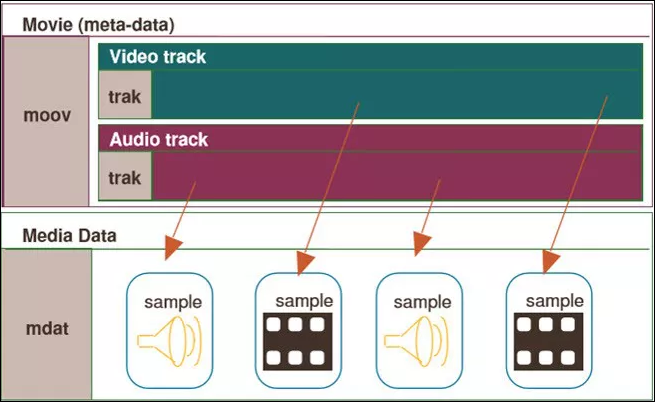 MP4 file structure How did MP4 come about? As we saw above, MP4 is a container format, not a codec. As a container, it supports various codecs: VP9, H.264, AV1, and others. The MP4 format originated from Apple’s QuickTime format, which was adapted and standardized by ISO as part of the MPEG-4 specification. The initial standard, ISO/IEC 14496-14, was published in 2003 and built upon the ISO Base Media File Format. This shared foundation means that MP4, MOV, and 3GP files are structurally similar. MP4 achieved dominance in the mid-2000s, when H.264 video compression became the standard for web video, Blu-ray discs, and mobile devices. YouTube, Netflix, and virtually all streaming platforms adopted MP4 with H.264 as their primary distribution format. The introduction of H.265/HEVC in 2013 brought further compression improvements, cutting file sizes in half while maintaining the same quality. The MP4 standard was managed by the MPEG LA consortium, a private, independent company founded in 1996 with the goal of licensing MPEG patents. In 2023, MPEG LA was acquired by VIA Licensing Group, which now controls the MP4 patents. However, don't get too excited—the MP4 standard whose patent has expired isn't the one everyone uses today. Once again, we need to explain how the MP4 standard is structured.
There are two different MPEG-4 video standards, and their patent statuses are completely different: MPEG-4 Part 2 (ISO/IEC 14496-2) is the codec used by DivX, Xvid, and Nero Digital. It was standardized in 1999 and uses block-based motion compensation with the discrete cosine transform. This is the codec whose patents expired on July 19, 2026. It is now completely patent-free. MPEG-4 Part 10 (ISO/IEC 14496-10), also known as H.264 or AVC, is a completely different codec, standardized in 2003. It is currently the most widely used video codec, found on Blu-ray discs, streaming services, and television broadcasts. H.264 is still largely protected by patents and managed by the Via Licensing Alliance. Its patents will not fully expire until the 2030s. In other words, the patent that expired was for the DivX and Xvid codecs—a family of codecs that fell out of use after the advent of the H.264 codec and, more recently, H.265. On July 19, 2026, the patents related to MPEG-4 Part 2 expired. The last one to expire belonged to Siemens AG and was in effect only in Brazil. The VIA Licensing Alliance has already taken down the webpage dedicated to it, which remained online until July 18, one day before the expiration date.
The expiration of the MPEG-4 Part 2 patent is just one event in a series of events to come. H.264/AVC, which replaced it, has its own patent portfolio; the last major H.264 patent in the U.S.—US 7826532—is set to expire on or around November 29, 2027. This does not mean that H.264 will immediately become free of restrictions everywhere; just as with MPEG-4 Part 2, some jurisdictions will take time to catch up with this change, and the exact geography of the expiration will need to be tracked on a patent-by-patent basis. HEVC/H.265, which offers a bit rate reduction of approximately 40 to 50 percent compared to H.264 at the same quality, presents a substantially more complex patent landscape. Several consortia manage HEVC patents—including Access Advance, Via Licensing, and Velos Media—with the Access Advance consortium alone covering more than 27,000 patents. Access Advance has imposed a 25% increase in fees for new licensees effective January 2026. HEVC patents extend well beyond 2030. Since the transmission of multimedia content was crucial to the development of the internet, a consortium—the Alliance for Open Media—was created, supported by companies such as Google, Mozilla, Amazon, and Netflix, which declared AV1 royalty-free; there is a Sisvel patent pool, but as of mid-2026, no user relying solely on software had been charged royalties for AV1. For active streaming and encoding work, H.264/AVC remains the de facto standard in the short term, with AV1 becoming the preferred option in cases where both bandwidth efficiency and royalty-free status are required. AV1 was developed specifically to circumvent this cycle, incorporating only techniques that are old enough to no longer be protected by patents or that were contributed royalty-free by AOM members. The tension between HEVC’s technical efficiency and its complexity in terms of patents—compared to AV1’s royalty-free status and its nearly comparable efficiency—has shaped streaming platforms’ codec choices in recent years and will continue to do so throughout the extended term of HEVC’s patents.
Although the expiration of the DivX/Xvid codec patents is good news, these codecs have long since been technically surpassed by the H.264/H.265 codecs, to the point where it is no longer advantageous to encode new videos with them. However, this isn’t always the case. There are situations where the DivX/Xvid codec can still be used today. Use DivX/Xvid when you need compatibility with older devices that only support DivX or Xvid playback, you’re archiving content for older hardware, or you’re maintaining media servers that serve outdated smart TVs and DVD players. A drawer full of DivX-certified DVD players that only recognize this codec is a common scenario. The codec is also useful for testing and development scenarios where a simple, well-known encoding target is required. |